
Mobility Aids
Freedom. Creativity. Connection. •
Freedom. Creativity. Connection. •

Building a more accessible future
Mr. Dudley has relied on assistive equipment for as long as he can remember. Instead of seeing mobility aids as something that holds him back, he sees them for what they truly are: gateways to freedom, creativity, and connection.
-
Dudley’s mobility journey began early, with simple tools that helped him sit, reach, see, and explore the world around him. These included:
A yellow corner seat, placed on the floor, table, or kitchen bench, allowed Dudley to sit upright and be part of everyday life — helping with cooking, sorting clothes, or simply being at the centre of activity.
A highchair with a pole to grip offered extra stability and the chance to engage more actively in family moments.
A small cane chair travelled everywhere — even to campfires on the way to Darwin — becoming a trusted companion that supported sitting and balance.
-
The greatest foundation for Dudley’s mobility, determination, and advocacy came not from equipment, but from an approach to life — and the school that taught it.
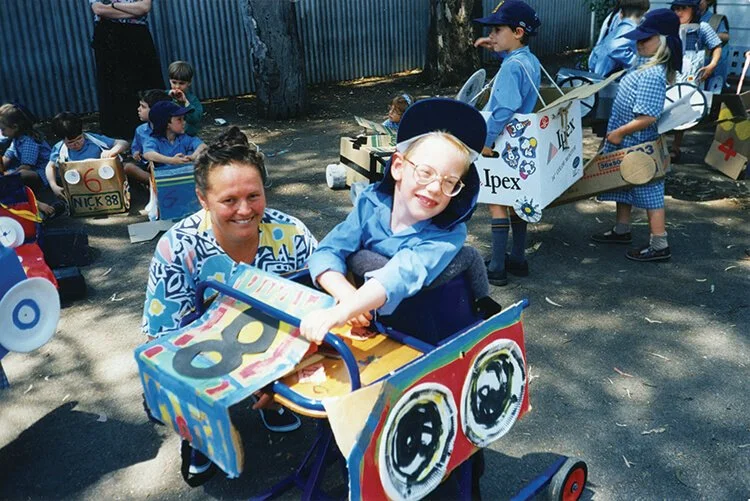
At the Conductive Education (CE) School in Tongala, Victoria, and later in Adelaide, Dudley spent four full-time preschool years immersed in a system that didn’t lower expectations — it raised them.
Exercises, mobility aids, sensory tools, communication supports — they weren’t used in isolation. They were part of a holistic, all-day, every-day approach that empowered both Dudley and his family.
Montessori Kindergarten also played a vital role, encouraging hands-on learning, independence, and confidence — all essential for mobility development.
-
Mobility aids and therapy tools weren’t always high-tech — many were homemade with purpose and love:
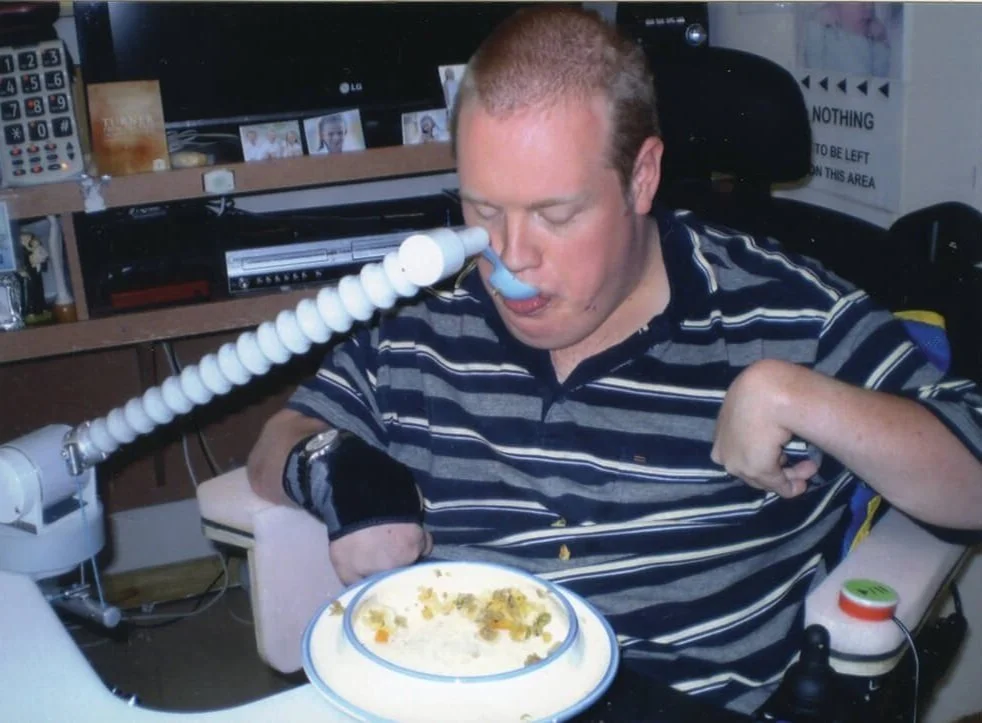
While many tools supported Dudley’s physical development, one of the most helpful innovations came from TAD (Technical Aid to the Disabled). TAD engineers enabled Dudley to control his television, CDs, and video player independently — giving him choice, control, and connection at home from both his bed and desk.
Dudley’s dad built a custom plinth and an adapted exercise bike to help strengthen his muscles and develop balance.
Even a cardboard box, a chair with back rungs, or a bath in the washing trough became functional supports for mobility and core strength.
At home, exercises were done daily with equipment like plinths, standing frames, and specially adapted seating — designed to build physical ability and confidence.
-
Dudley’s family made regular visits to SERU (Special Education Resource Unit), borrowing a range of adapted toys and tools to see what could support his development best.
These included:
Sensory toys to improve hearing and visual perception
Cause-and-effect toys with buttons that activated sounds — encouraging movement, reaction and play
Early standing frames and push chairs with adaptive seating to support posture and upright activity
Dudley’s vision therapy was also unique — every night, he would track the flame of a candle across his field of view to retrain his eyes to scan and see, compensating for vision loss on the right side. This consistent work helped him gain awareness and strengthen his sight pathways.
-
Movement wasn’t just therapy — it was joy.
Swimming played a major role throughout Dudley’s life, with sessions in private pools, North Adelaide Aquatic Centre, Hazelwood Park gym, and Minda
A three-wheeler bicycle, adapted so Dudley could ride to school, became a source of pride and independence
-
As Dudley got heavier and could no longer weight bear, the complexity of his aids increased:
In 1996, Dudley received his first electric wheelchair — a life-changing moment that offered greater freedom, autonomy, and adventure
A custom-built shower commode chair on wheels, now replaced with a larger version, made personal care easier and safer
Mechanical lifters, paired with slings, helped move Dudley from bed to shower and back
Slippery sheets, including a fitted and loose top sheet, made turning in bed easier
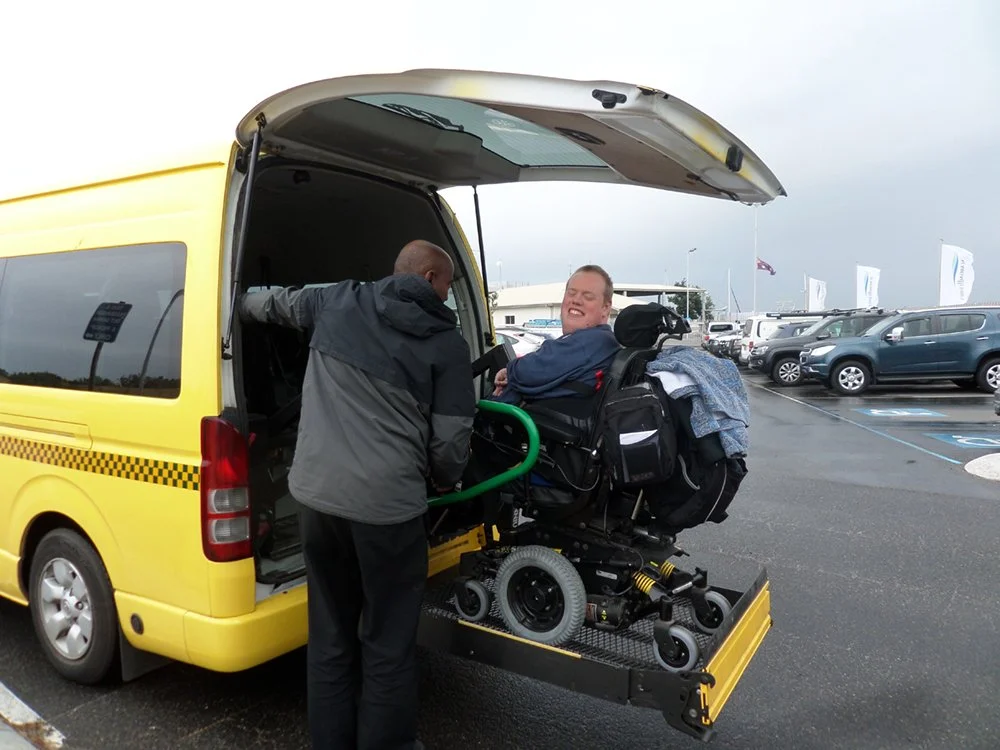
In 2002, the family purchased and modified a Ford Transit van with a rear lift and wheelchair restraints — a life-changing investment that opened new doors
-
When the family moved to Macclesfield, ramps, levelled footpaths, and custom-built features gave Dudley complete mobility around home
An accessible bathroom, door modifications, and a purpose-built table meant Dudley could join the family at mealtimes
A custom long desk held his TV, DVD player, and essentials — later, a portable version was built
-
Early attempts to use public transport weren’t always smooth —but Dudley can now access city buses, trams, and trains independently from his local stop
From Melbourne to Darwin, Tasmania to Canberra, the family travelled far and wide — often pushing lifters and hauling custom gear up city streets just to make it happen.
-
Over the years, Dudley worked with an incredible team of therapists — from the Crippled Children’s Association to speech therapists, occupational therapists, physiotherapists, and more. But the journey didn’t stop there. His family explored a wide range of alternate therapies to complement traditional care — including:
Acupuncture
Chiropractic care
Crystal therapy, kinesiology, muscle therapy, light therapy, aura cleansing
Anything that could help improve muscle tone, sensory processing, and mobility was welcomed — always with the hope of giving Dudley more freedom in his body and in his life.
Mobility as expression
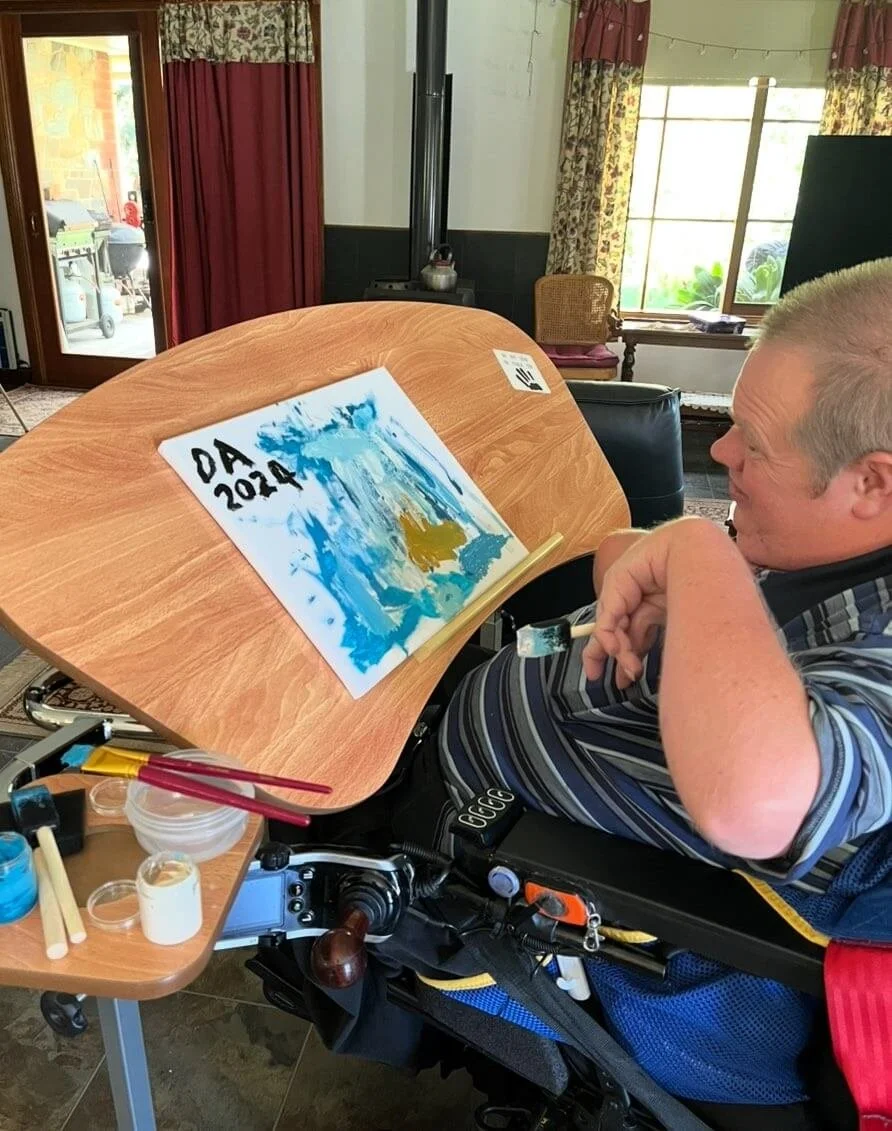
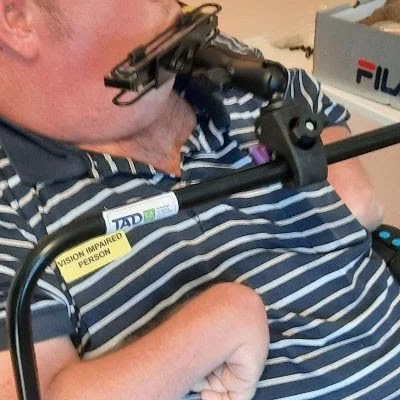
One of the most inventive additions to Dudley’s chair has been Tool 5147 — a custom-designed bracket that holds both an iPad and a mouth organ. This dual-purpose support allows him to stay connected digitally while expressing himself musically — a beautiful symbol of how mobility tools can empower creativity and self-expression.

-
![White quotation marks inside a white circle on a black background.]()
“Dudley has great strength, self-belief and determination. These character traits have contributed to his personal success in life, and his ability to understand and advocate for others in similar life circumstances.”
– Anne Dullagham
-
![Black background with white quotation marks inside a white circle.]()
“Dudley's passion for the theatre and concerts is heartwarming and awe-inspiring. I admire his can-do attitude and his self-determination when making decisions to have more control in his life. He's always interested in exploring new activities and challenges. Onya Dudley!”
– Inta Yates
-
![White quotation marks inside a white circle on a black background.]()
“Dudley is an inspiration to all. Despite his major handicaps and with his family help he has achieved more than most people. He keeps pushing the boundaries that his handicaps have set, and he still has things he intends to do. He truly believes that anything is possible if you really want it."
– Bev Flemming